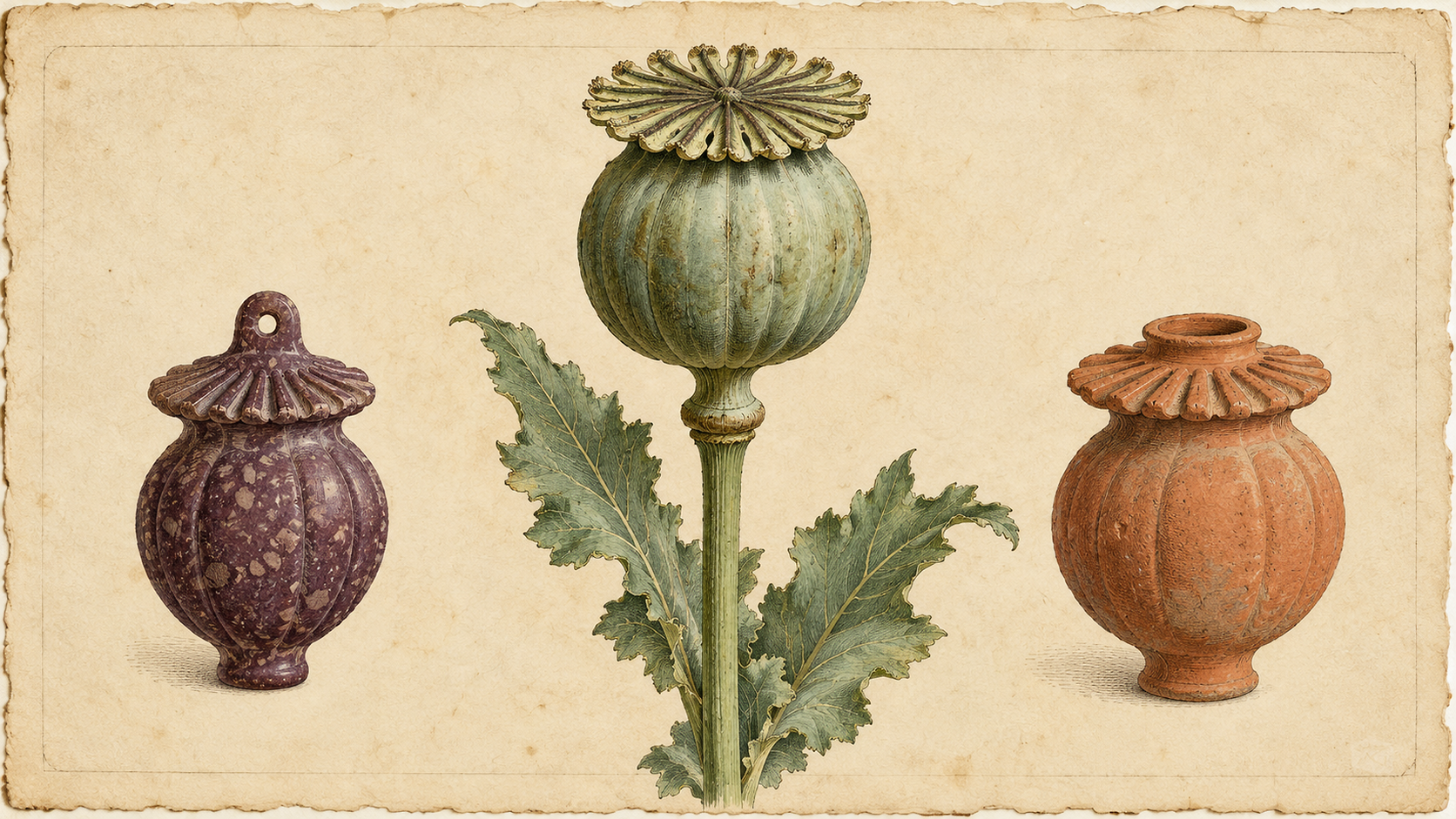
In the domestic shrines and cemetery assemblages of the Late Cycladic and Minoan worlds, few botanical silhouettes appear with the persistence of the swollen poppy capsule. Sculpted in deep mottled porphyry, pierced as miniature suspension pendants, or turned in fine clay as ritual libation vessels, these objects evoke the seedhead of Papaver somniferum with deliberate anatomical precision. Yet deciphering whether these forms commemorated an agrarian narcotic, an elite palliative, or a broader sacred metaphor requires sifting material stratigraphy from decades of speculative romanticism.
The Stylized Capsule in Aegean Material Culture
In the ceramic sequences of the Late Bronze Age Aegean, certain vessel shapes abandon purely utilitarian contours to emulate the natural architecture of dried seedheads. Across the maritime settlements of Crete, Melos, Thera, and Kea, excavators have uncovered vessels whose swelling bellies, delicate ring bases, and grooved necks immediately recall the ripened fruiting body of Papaver somniferum. Rather than haphazard ornament, the adherence to these specific botanical ratios suggests that island potters observed the drying capsule at close quarters, translating its structural logic into fired earth.
Parallel to these ceramic vessels is a tradition of personal lapidary ornaments. Miniature pendants carved from dark porphyry, steatite, and serpentine repeat the same diagnostic features: a globular body tapering toward a slender neck, crowned with a flattened, radiate disc. Found in both domestic contexts and elite shaft graves, these small stone amulets demonstrate that the capsule form was not confined to palatial storehouses or communal shrines, but circulated as an intimate adornment worn upon the body.
The scholarly interpretation of these objects has long oscillated between two poles. Early twentieth-century antiquarians readily declared any capsule-shaped artifact evidence of a widespread ecstatic cult, while later material culture specialists urged caution, pointing out the decorative conventions of Aegean craft and the potential for botanical ambiguity. To understand these artifacts, one must interrogate the precise intersection of botanical reality, lapidary technique, and archaeological context across the Cycladic and Minoan spheres.
Botanical Anatomy of Papaver somniferum
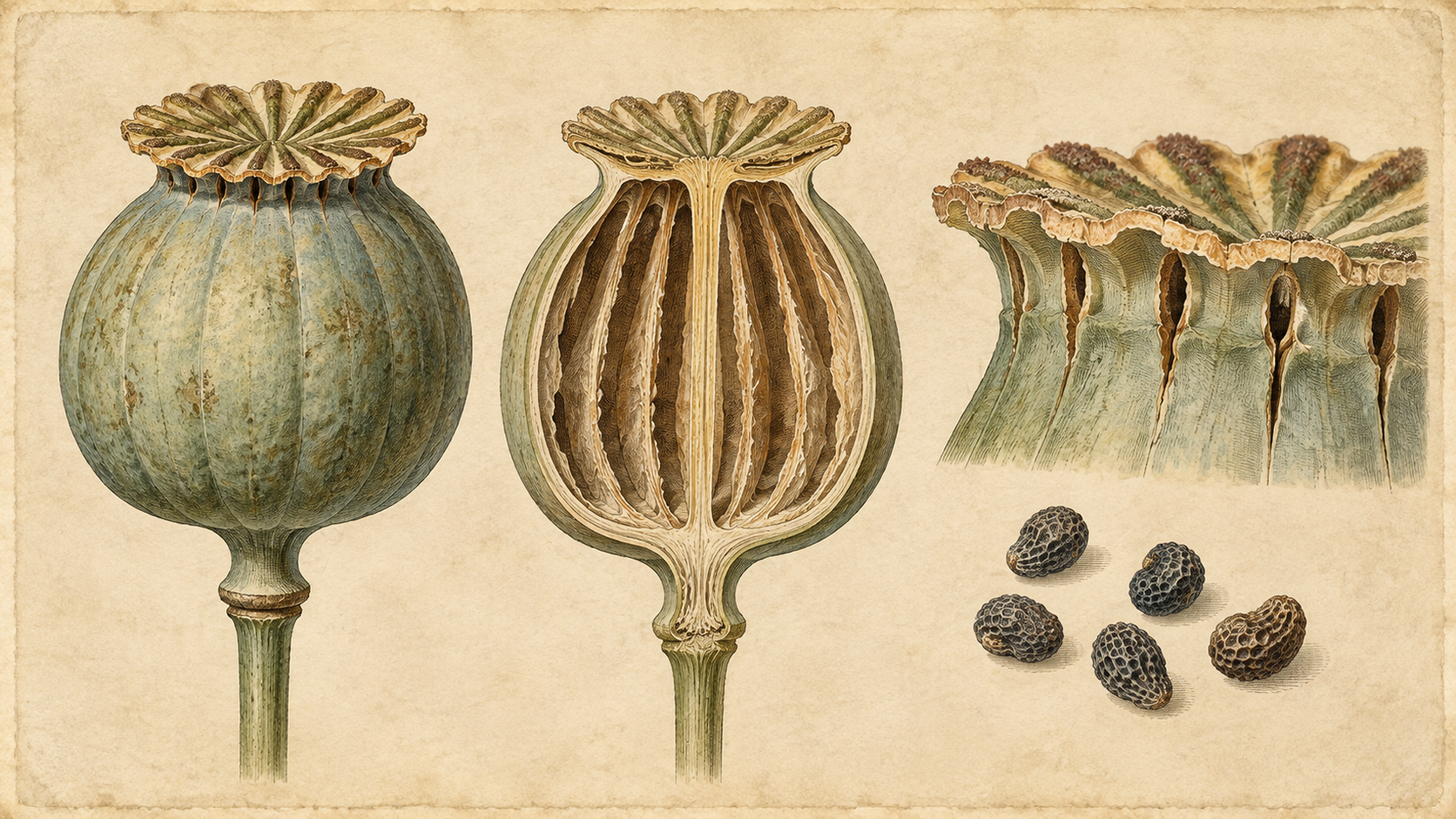
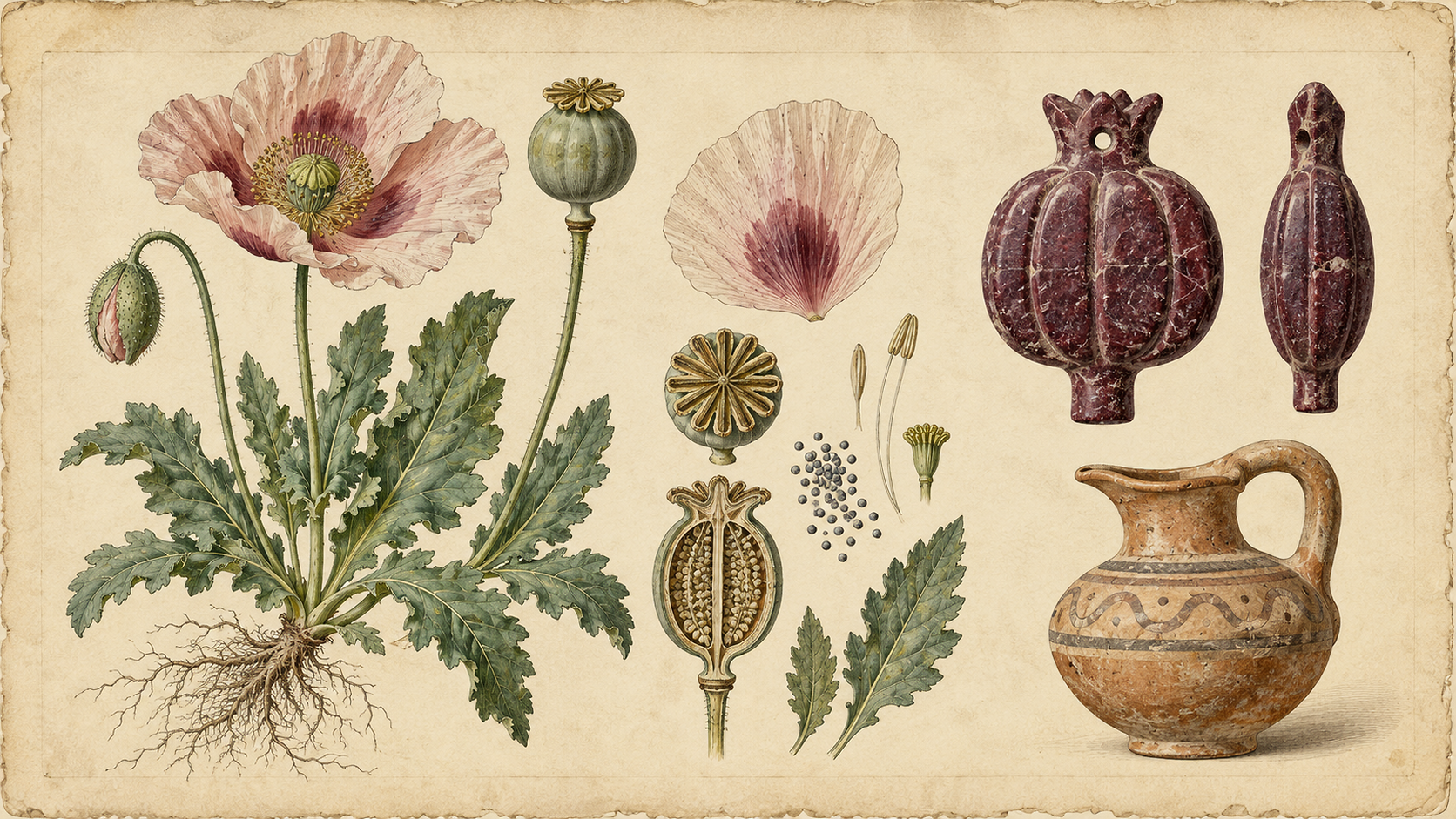
The opium poppy is an annual herb characterized by an upright glaucous stem, clasping lobed leaves, and large solitary flowers with fleeting petals that fall within hours of anthesis. Following pollination, the superior compound ovary undergoes rapid cellular expansion, transforming into the glaucous, subglobose or oblong capsule that dominates the visual record of the plant. This seedhead is neither flat nor simply spherical; its geometry is defined by the tension between internal locules and the exterior pericarp.
At the apex of the capsule sits the stigmatic disc, an unmistakable botanical fingerprint consisting of numerous radiating rays, typically numbering between eight and eighteen. These rays represent the receptive stigmatic surfaces that have hardened into a crenelated, wheel-like canopy over the fruit. Directly beneath the margin of this disc, as the capsule matures and desiccates, small pores or valves dehisce, allowing wind-dispersed seeds to rattle free through poricidal openings.
In the living plant, the laticiferous vessels course through the outer walls of the unripe capsule, containing an emulsion rich in isoquinoline and benzylisoquinoline alkaloids. The harvest of this latex requires delicate incising of the pericarp before the seeds ripen, a technique that leaves permanent, calloused scars on the drying capsule. It is precisely these mechanical details—the flat radiating star of the disc, the subtle ribs of the pericarp, and the residual scoring marks—that appear repeatedly in the Aegean archaeological repertoire.
The Gazi Goddess and the Stigmatic Crown
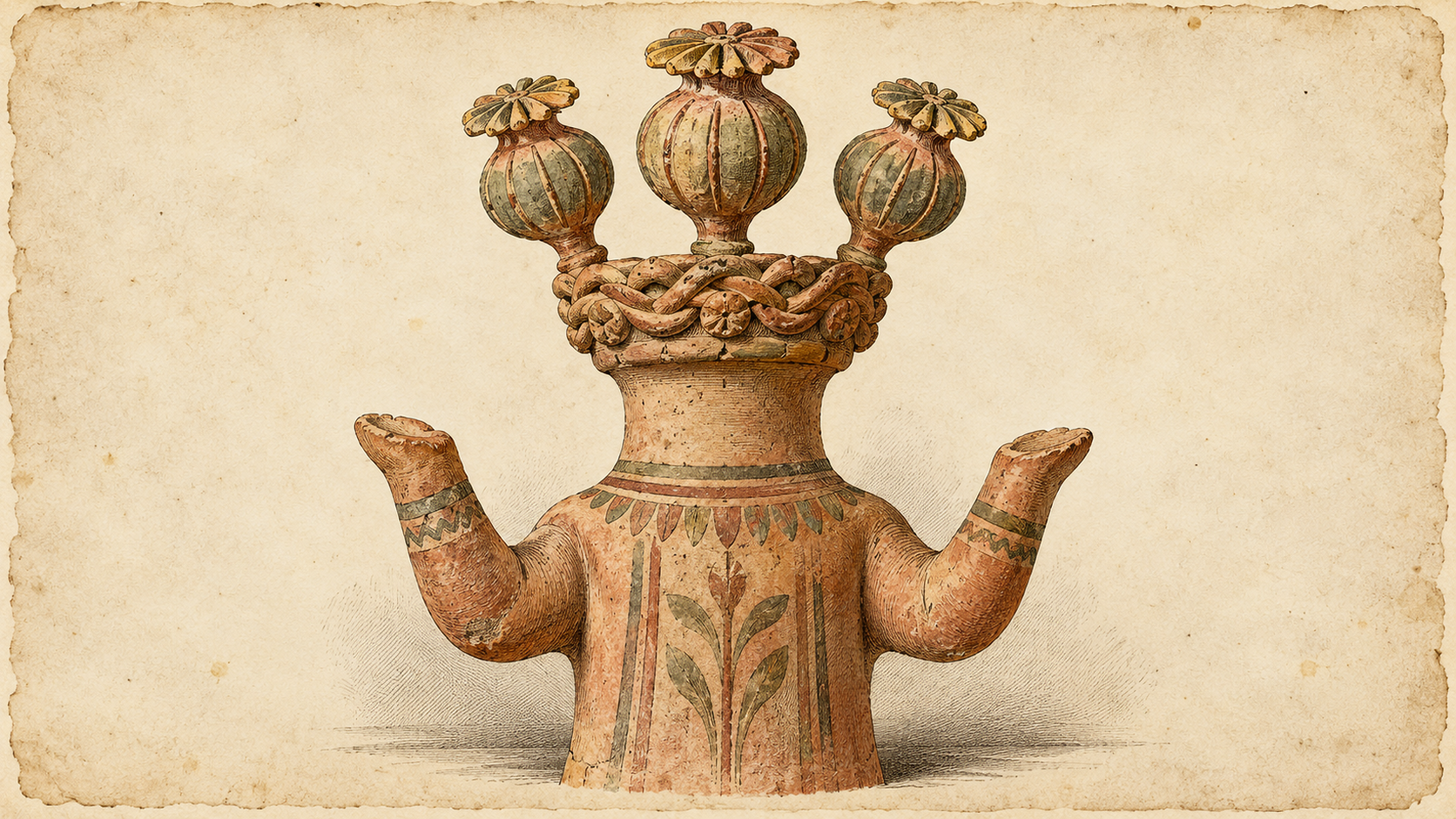
The most celebrated convergence of Aegean religious sculpture and poppy anatomy is the large terracotta female figure discovered by Spyridon Marinatos in 1937 at Gazi, west of Heraklion. Dated to the Late Minoan III period, this cylindrical wheelmade goddess stands with raised arms in a gesture of benediction or epiphany. Rising above her elaborate hairband are three movable, pin-like hair ornaments carved in the precise likeness of swollen poppy capsules, each crowned by a wide, distinctly notched stigmatic disc.
Crucially, the Gazi capsules display faint, vertical incisions gouged into the wet clay prior to firing. Marinatos argued that these decorative slashes represented the deliberate scoring of the pericarp to harvest opium latex, identifying the figure as a patron deity of somniferous medicine, analgesia, and prophetic sleep. In this reading, the goddess does not merely wear decorative floral pins; she embodies the agricultural and ceremonial processing of a potent botanical commodity.
Subsequent decades of scholarship have introduced necessary nuance to Marinatos's confident formulation. Archaeologists such as Peter Warren and Stylianos Alexiou noted that while the visual affinity with scored capsules is striking, vertical incisions also appear as a standard decorative trope on Aegean ceramic vessels and terracotta pins representing other floral subjects. The Gazi figure firmly establishes the capsule as an elite ritual emblem, but whether it signifies liturgical intoxication or a broader agrarian fertility remains an open question.
Porphyry and Serpentine: Lapidary Capsule Pendants
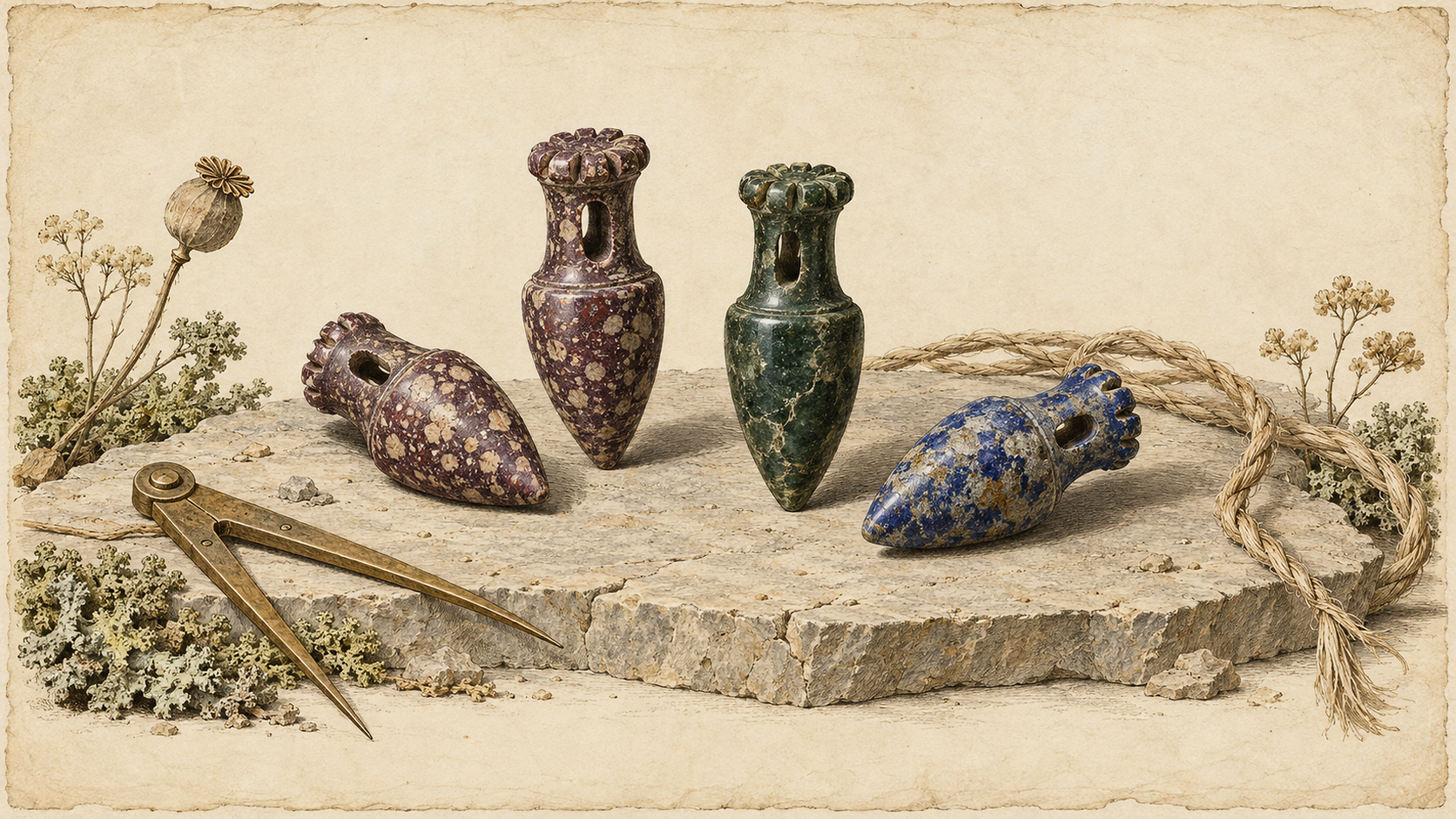
Beyond large terracotta figures, the capsule form entered the personal sphere through miniature stone carving. In the Middle and Late Cycladic strata of Phylakopi on Melos and Ayia Irini on Kea, lapidaries produced drilled suspension beads and pendants from dense volcanic and metamorphic stones. Among these, deep green serpentine, mottled lapis lacedemonius, and purple-flecked porphyry were favored for their weight, tactile smoothness, and capacity to hold crisp, incised lines.
Carving a convincing capsule from hard stone demanded exceptional technical mastery. Lapidaries used tubular copper drills with quartz sand abrasives to core the central suspension channels, followed by stone micro-blades to notch the perimeter of the apical disc into radiating teeth. The surviving pendants rarely exceed three centimeters in length, yet their proportions faithfully capture the natural swelling of the subglobose seedhead, often including the delicate ring where the pedicel originally met the base.
The function of these stone pendants is frequently debated. Suspended from cords of braided flax or leather, they may have functioned as apotropaic talismans, markers of lineage, or tokens of membership in specific healing or priestly sodalities. Their distribution in both graves and domestic thresholds suggests that the capsule was understood as a protective motif, perhaps associated with restful slumber, relief from suffering, or safe passage through physical and spiritual crises.
Base Ring Juglets and Maritime Exchange
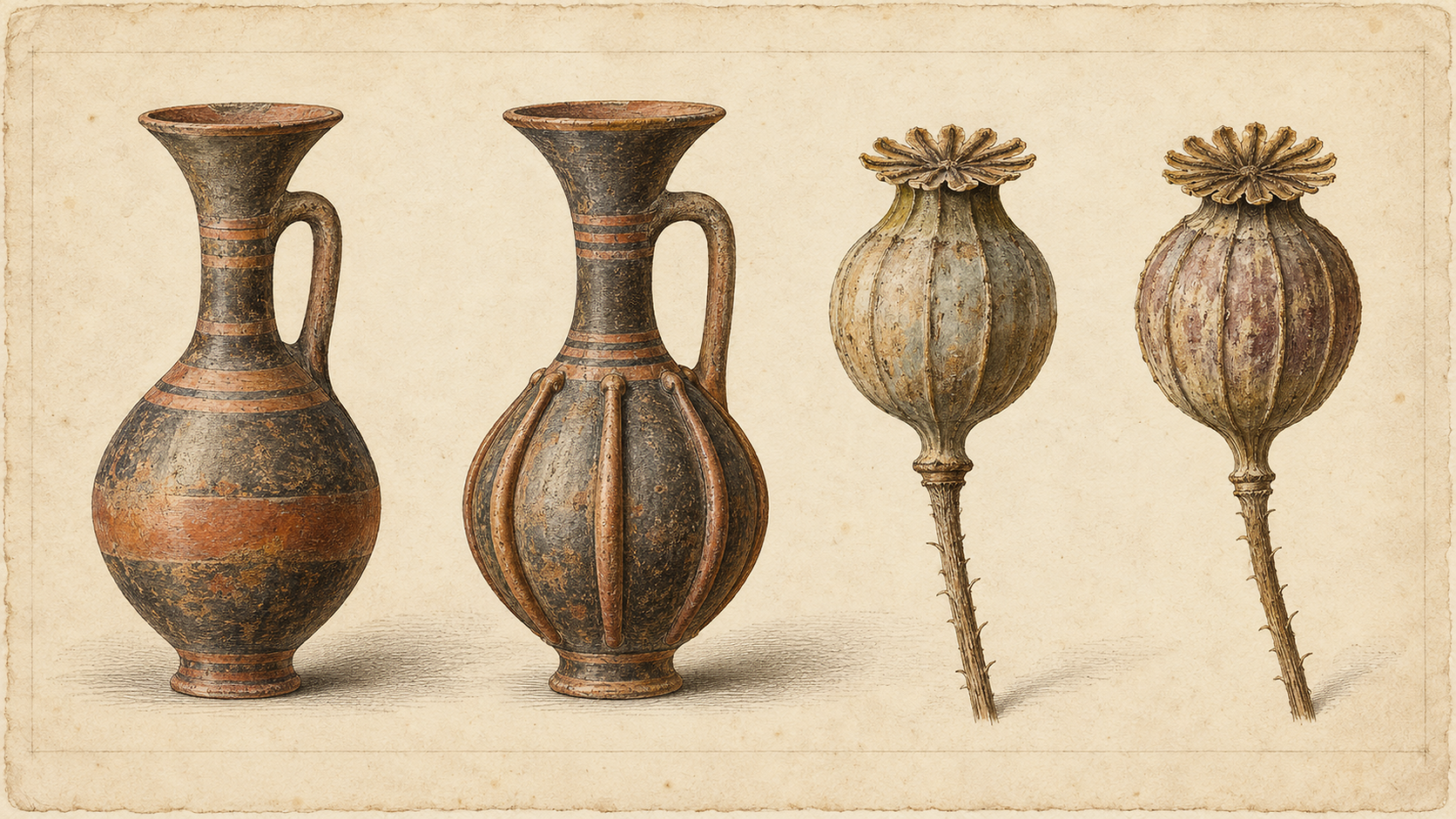
Any examination of Aegean poppy iconography must account for the maritime circulation of Base Ring ware, a distinctive class of Late Bronze Age Cypriot ceramics that saturated the trade routes of the eastern Mediterranean, including Rhodes, Crete, and the Cycladic islands. These thin-walled, metallic-looking vessels feature an inverted piriform body, a long slender neck, and a flaring rim, visually replicating an inverted, dried poppy capsule held by its stem.
Adding to this botanical mimicry, potters frequently applied raised plastic ridges, cordons, and painted white slip patterns to the ceramic body. Many researchers, following the prominent thesis advanced by Robert Merrillees in the 1960s, have argued that these raised bands simulate the healed vertical incisions made upon poppy capsules during latex collection. Merrillees proposed that Base Ring juglets were purpose-built packaging designed to advertise their contents: liquid preparations of opium dissolved in wine or oil, traded throughout the Levant and the Aegean.
While the inverted capsule morphology of Base Ring juglets is widely accepted, the trade hypothesis has faced intense scrutiny from modern analytical chemistry. Organic residue studies on museum specimens have produced uneven, frequently unrepeatable results. While some samples have suggested trace poppy alkaloids, others indicate aromatic resins, perfumed olive oils, or animal fats, suggesting these vessels served multifaceted roles within the perfumery and cosmetics trade rather than acting solely as specialized narcotics containers.
Akrotiri and the Frescoes of Thera
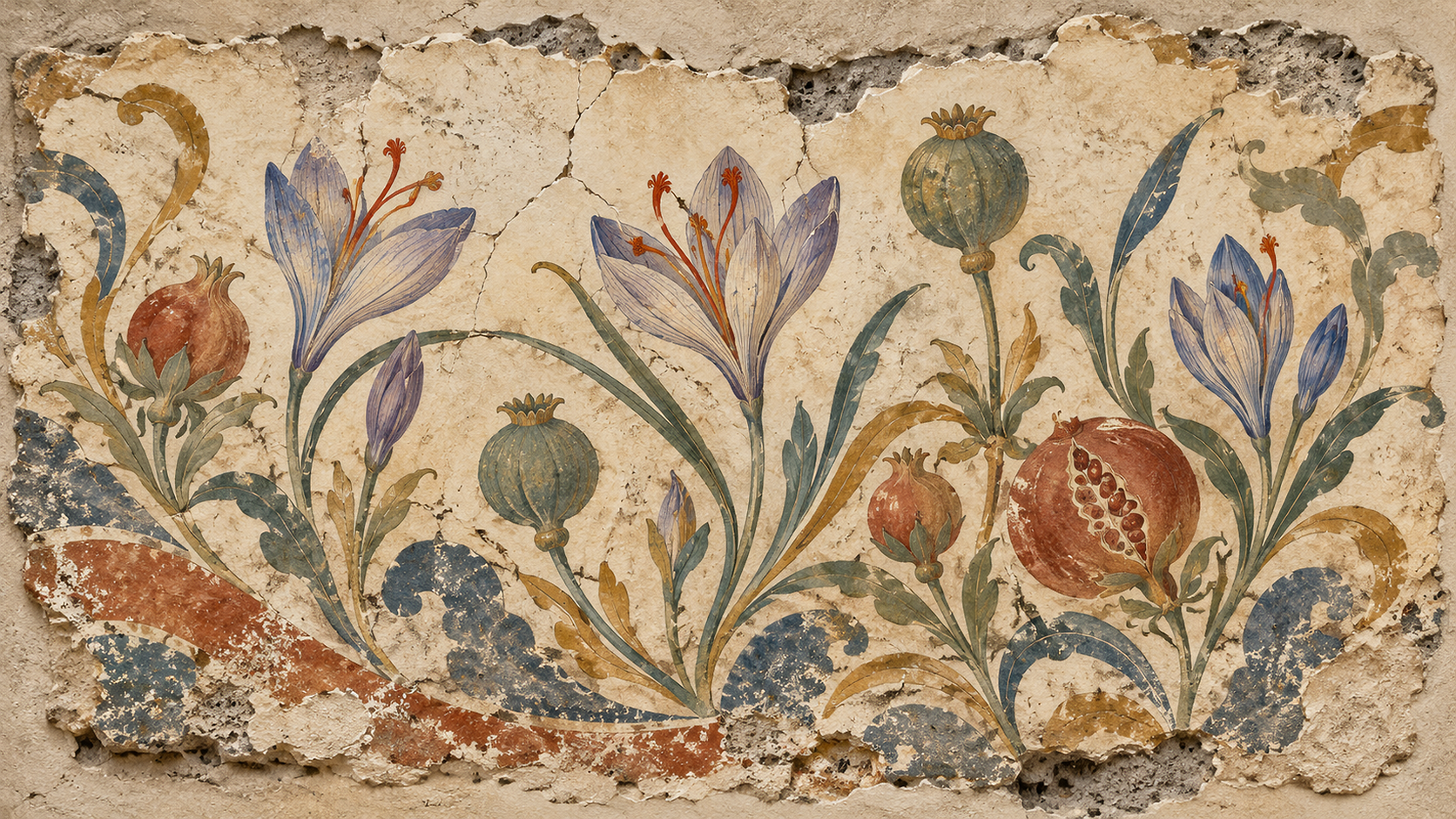
The catastrophic eruption of the Thera volcano preserved an unprecedented record of Late Cycladic life beneath thick layers of volcanic tephra at Akrotiri. Among the remarkable wall paintings recovered from the West House and Xeste 3, the attention of artists to natural detail is unparalleled in the ancient world. The fresco painters rendered marine life, waterfowl, reeds, and lilies with remarkable fidelity, establishing that the visual culture of the Cyclades was deeply attuned to precise natural morphology.
Within Xeste 3, a building widely interpreted as a site for public female initiation rituals, frescoes depict young women gathering the red stigmas of the autumn crocus (Crocus sativus). Alongside these crocus gatherers, several painted borders and textile decorations feature rounded seedheads that various scholars have compared to either poppies or young pomegranates. The naturalistic rendering of the plants reinforces the understanding that island communities possessed sophisticated botanical literacy, distinguishing vegetative and reproductive stages with great care.
Unlike the stylized clay vessels, however, unambiguous painted murals of Papaver somniferum flowering stems remain surprisingly scarce at Akrotiri. The artists focused overwhelmingly on the blue and red blossoms of lilies, papyrus, and crocuses. This artistic divergence implies that if poppies were indeed used in Cycladic life, their presence was mediated primarily through dried capsules, concentrated extracts, or stylized symbolic objects rather than widespread celebration as an ornamental landscape bloom.
Ceramic Rhyta and Ritual Libations
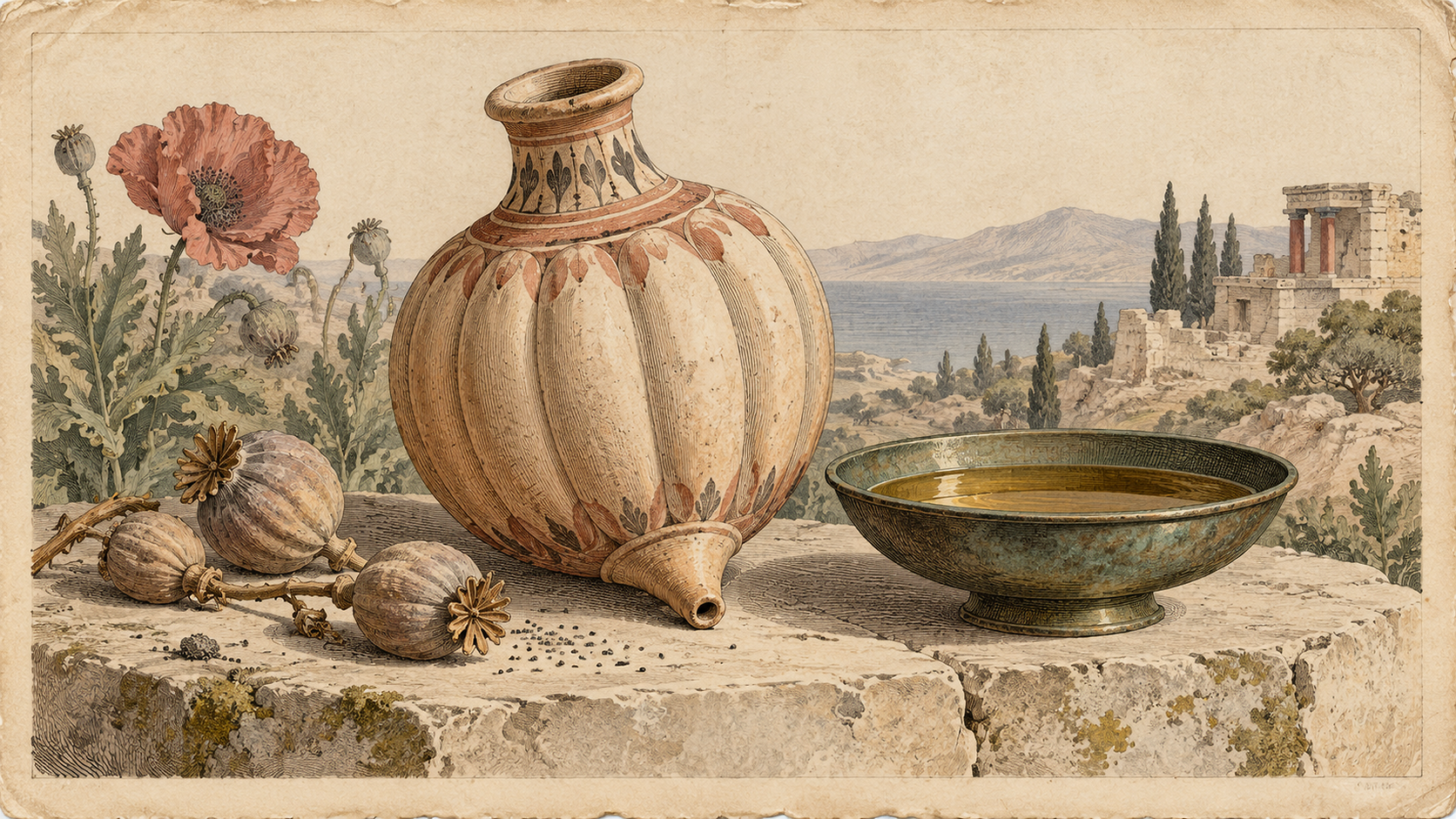
In both palatial complexes and rural sanctuaries, the act of pouring libations was central to Bronze Age religious performance. Archaeologists classify specialized pouring vessels with a small piercing at the base alongside an open mouth as rhyta. Several ceramic rhyta from Late Minoan and Late Cycladic contexts deviate from standard conical or animal-head forms, adopting instead the distinct, lobed profile of a ripe seedhead.
These poppy-form rhyta functioned through precise physical control of fluids. By submerging the vessel in an open basin of liquid and covering the secondary aperture with a thumb, a priest or ritual celebrant could suspend the contents until releasing the seal over an altar or offering table. The association between a vessel shaped like a sedating seedhead and the controlled flow of wine, honey, or botanical infusions suggests an intentional link between vessel form and the sensory impact of the libation.
Excavations at sanctuaries like Phylakopi on Melos have yielded ceramic vessel fragments within bench shrines, surrounded by miniature terracotta offerings and shells. While direct chemical confirmation of what was poured remains elusive, the symbolic intent is clear: the fluid was delivered through an instrument fashioned in the image of a plant known for slumber, cessation of pain, and cyclical regeneration.
The Debate Over Incision Marks
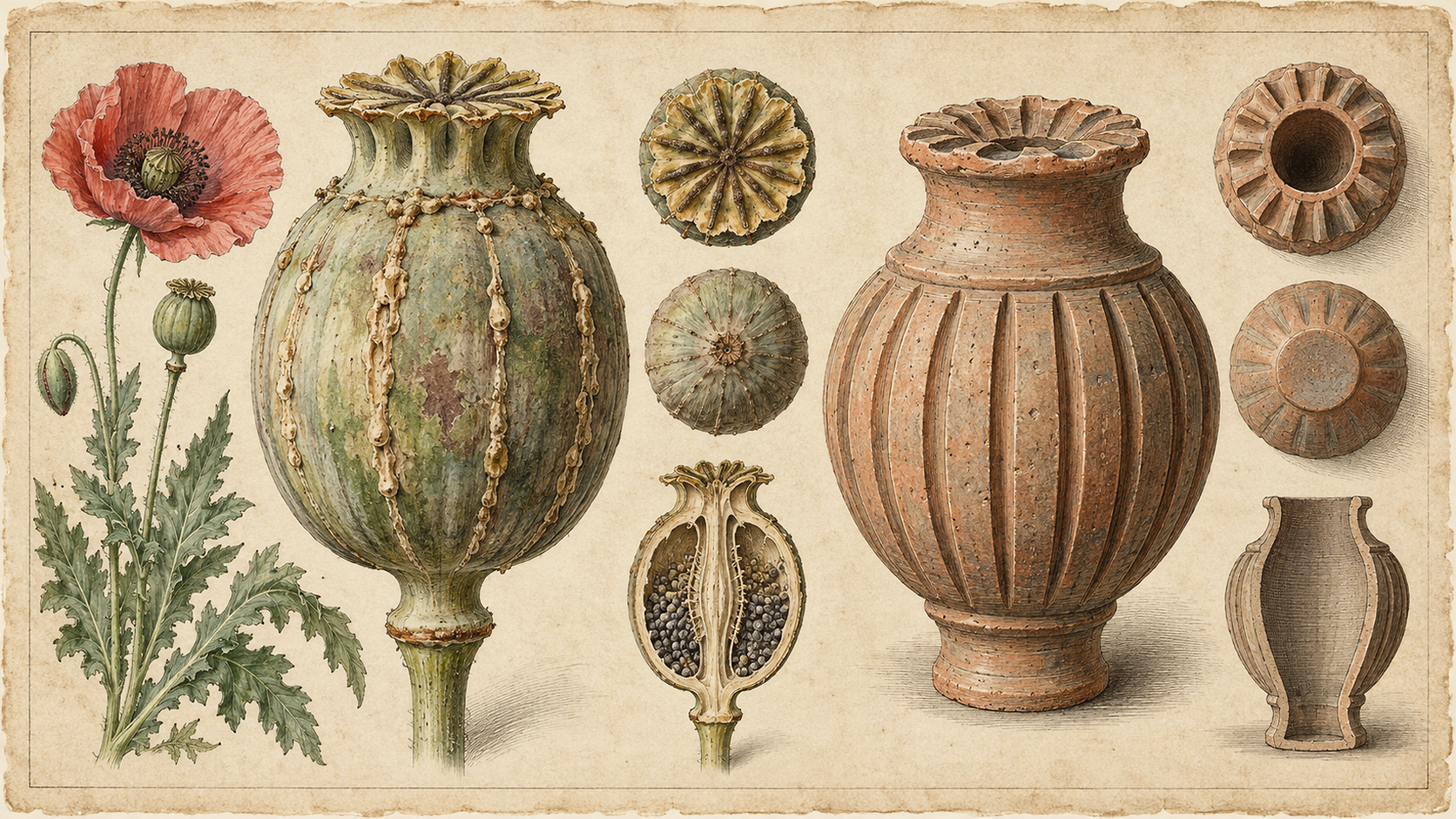
A central controversy in Aegean archaeology centers on whether incised decorations on clay capsules represent actual latex extraction practices. Proponents of the narcotic thesis, beginning with Panagiotis Kritikos and continuing through later botanical historians, argue that potters would not arbitrarily apply vertical and horizontal slashings to the surface of a stylized capsule without referencing contemporary agricultural techniques. In the Mediterranean, latex is traditionally tapped by making shallow vertical or horizontal cuts across the widest part of the pericarp.
Conversely, ceramic analysts caution against over-interpreting decorative conventions. Scoring, grooving, and fluting were standard techniques used by Aegean potters to catch light on burnished vessels or to assist in joining clay slabs. Similar grooving appears on terracotta gourds, figs, and purely abstract geometric vessels where no pharmacological tapping could possibly be implied. To read every incised line as an ethnographic manual for harvesting opium is to underestimate the abstract aesthetic tendencies of Bronze Age potters.
Moreover, ancient agricultural texts from later Greek and Roman eras—such as Theophrastus's Enquiry into Plants and Dioscorides's De Materia Medica—describe latex harvesting in the Levant and Asia Minor in detail, but remain silent regarding widespread cultivation for drug extraction in the prehistoric Aegean. Consequently, while vertical marks on vessels like the Gazi pins remain tantalizingly suggestive, they cannot serve as conclusive proof of an industrialized opium harvest in the Bronze Age islands.
Geology, Lapidary Art, and Volcanic Stones
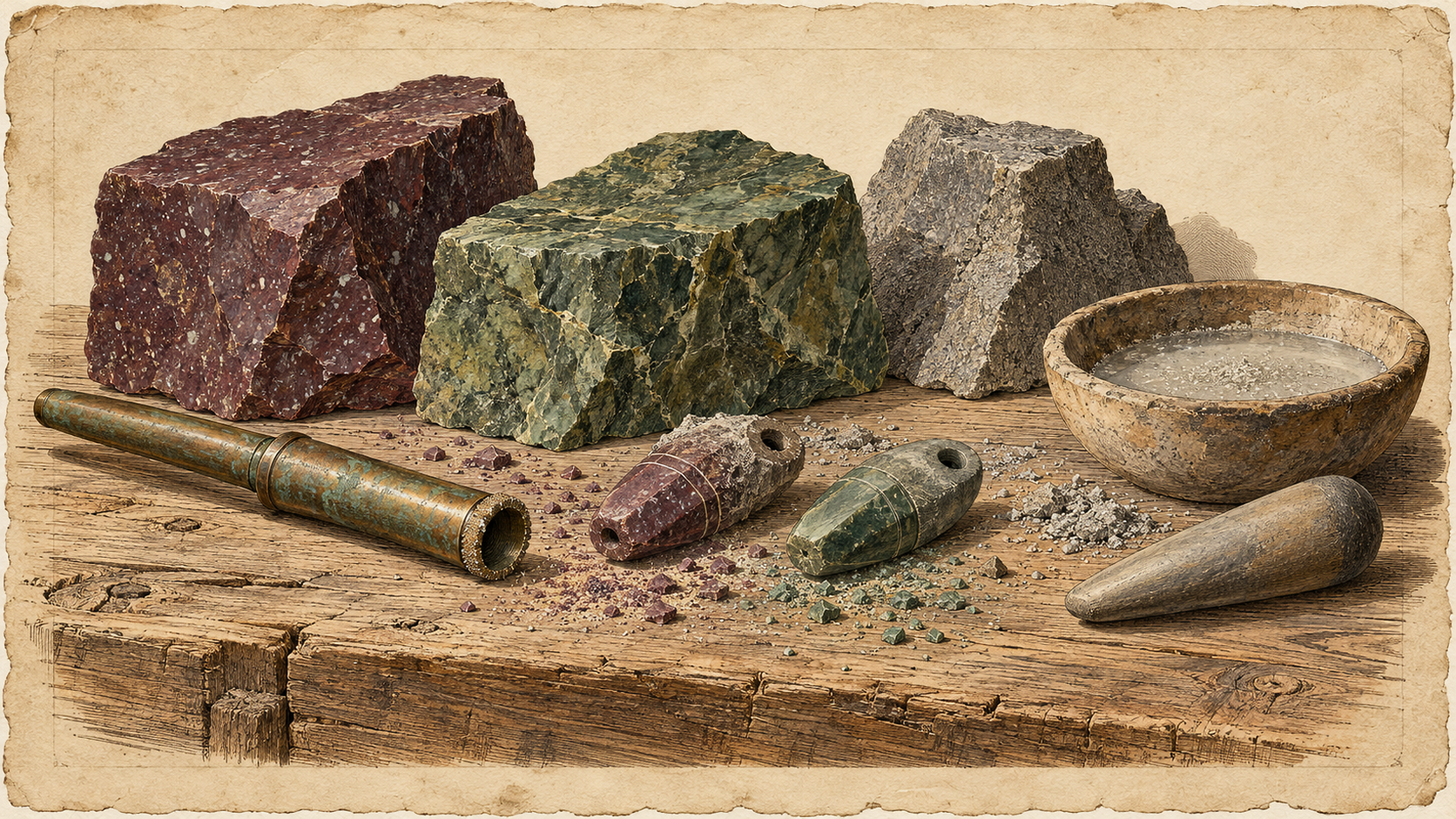
The physical nature of Cycladic capsule pendants was dictated by the complex geological history of the Aegean basin. The islands of the Cycladic volcanic arc, including Milos and Santorini, alongside metamorphic formations on Naxos and Paros, provided ancient stone workers with a rich variety of raw materials. To carve a lasting pendant, artisans selected stones that could endure daily friction without fracturing across internal cleavage planes.
Porphyry, an igneous rock characterized by large feldspar or quartz crystals embedded in a dense fine-grained matrix, was prized for its striking color contrasts and hardness. Working such material without iron tools required immense patience: lapidaries utilized emery from Naxos as a grinding slurry, applying it with bone, wood, or soft bronze chisels. The choice to render the fragile, papery structure of a poppy capsule in this dense, unyielding volcanic medium demonstrates the deep symbolic investment attached to the form.
The visual qualities of these stones also carried meaning. The deep reds and purples of porphyry and the earthy, serpentine greens mirrored the physiological transitions of the living plant, from the green glaucous skin of the unripe capsule to the dark, bruised tones that appear after mechanical injury or desiccation. By fixing this ephemeral organic transformation into stone, Cycladic lapidaries produced durable amulets capable of outliving the fragile flora of the agricultural cycle.
Organic Residue Analysis and Palatial Storehouses
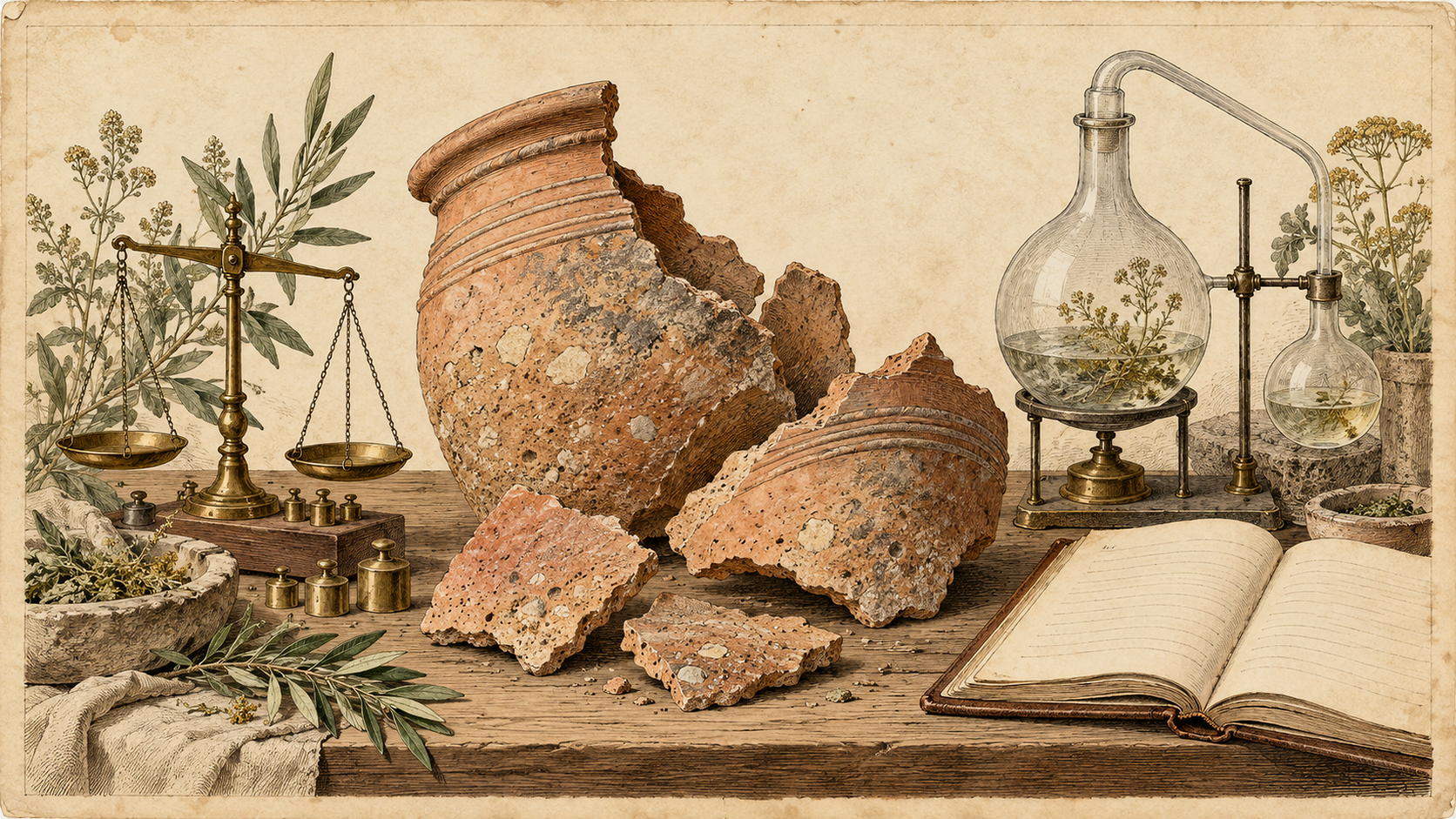
Over the past three decades, the application of gas chromatography-mass spectrometry (GC-MS) to Aegean ceramic sherds has sought to resolve decades of stylistic debate. By extracting absorbed lipid and alkaloid residues from the unglazed porous fabric of pithoi, stirrup jars, and juglets, researchers have attempted to identify the specific organic compounds housed within palatial and domestic storerooms.
Identifying opium in archaeological ceramics presents formidable chemical challenges. The key alkaloids of Papaver somniferum—morphine, codeine, thebaine, papaverine, and noscapine—are nitrogen-rich organic molecules that degrade rapidly in warm, alkaline, and well-aerated soils like those characteristic of the Mediterranean. Unlike stable plant lipids or beeswax, alkaloids break down into small, non-diagnostic fragments over millennia, leaving behind ambiguous chemical signatures that are easily contaminated by modern handling.
While some studies on Cypriot Base Ring juglets from Egyptian contexts initially reported trace detections of degraded morphine-like compounds, subsequent blind replications in other laboratories frequently failed to confirm these findings. In Crete and the Cyclades, the vast majority of palatial pithoi analyzed have yielded signatures of olive oil, resinated wine, and animal tallow. The absence of confirmed alkaloids does not disprove the use of poppies, but it warns against treating palatial centers as large-scale opium refineries without unambiguous chemical proof.
Seedhead or Pomegranate: Visual Ambiguity
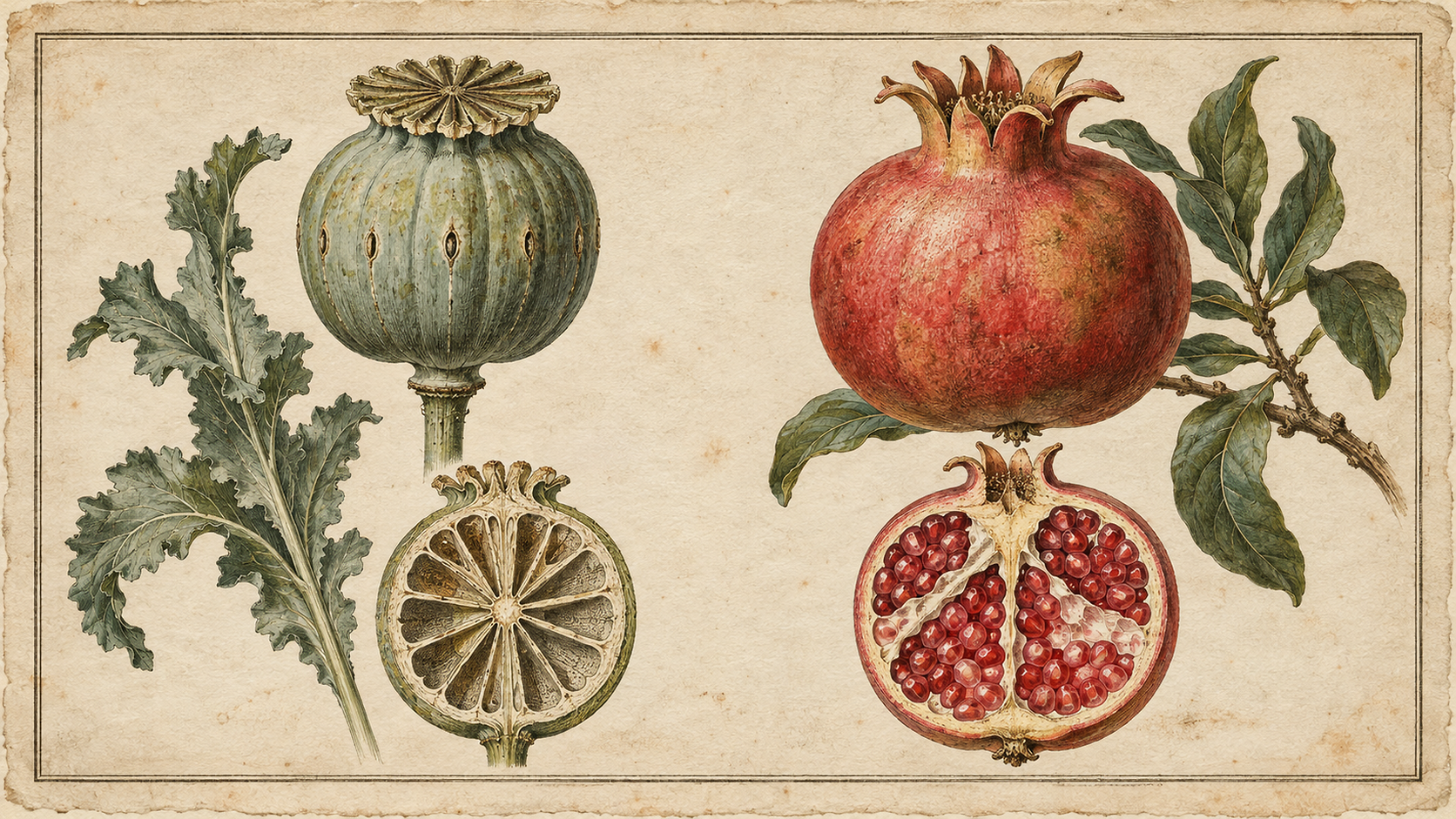
A recurring dilemma in Aegean botanical iconography is the morphological similarity between the capsule of Papaver somniferum and the fruit of the pomegranate, Punica granatum. Both structures share a rounded, globose silhouette, a tapered neck, and a prominent apical crown. In stylized art, distinguishing between the stigmatic disc of a poppy and the persistent, toothed calyx of a pomegranate requires careful attention to specific diagnostic details.
Botanists and art historians distinguish the two primarily by looking at the apical structure. The pomegranate's calyx forms a tubular collar that opens outward into fleshy, triangular sepals, often leaving a hollow depression in the center. In contrast, the poppy capsule terminates in a solid, flattened disc with radiating rays that lie flush or slightly convex over the top of the fruit. Furthermore, pomegranate fruits possess an indented, round calyx scar rather than the radiating poricidal ring of the poppy.
Despite these botanical differences, ancient artisans frequently blended features from multiple species, creating syncretic motifs that embodied broader concepts of vegetative abundance and regeneration. Pendants and clay beads may deliberately evoke both plants simultaneously: the pomegranate, with its innumerable scarlet arils, symbolized fertility and underworld descent, while the poppy, with its microscopic seeds and somniferous latex, evoked sleep, analgesia, and quietude. Recognizing this fluidity prevents modern researchers from forcing strictly binary classifications onto Bronze Age symbolic art.
Domestic Shrines and Household Votives
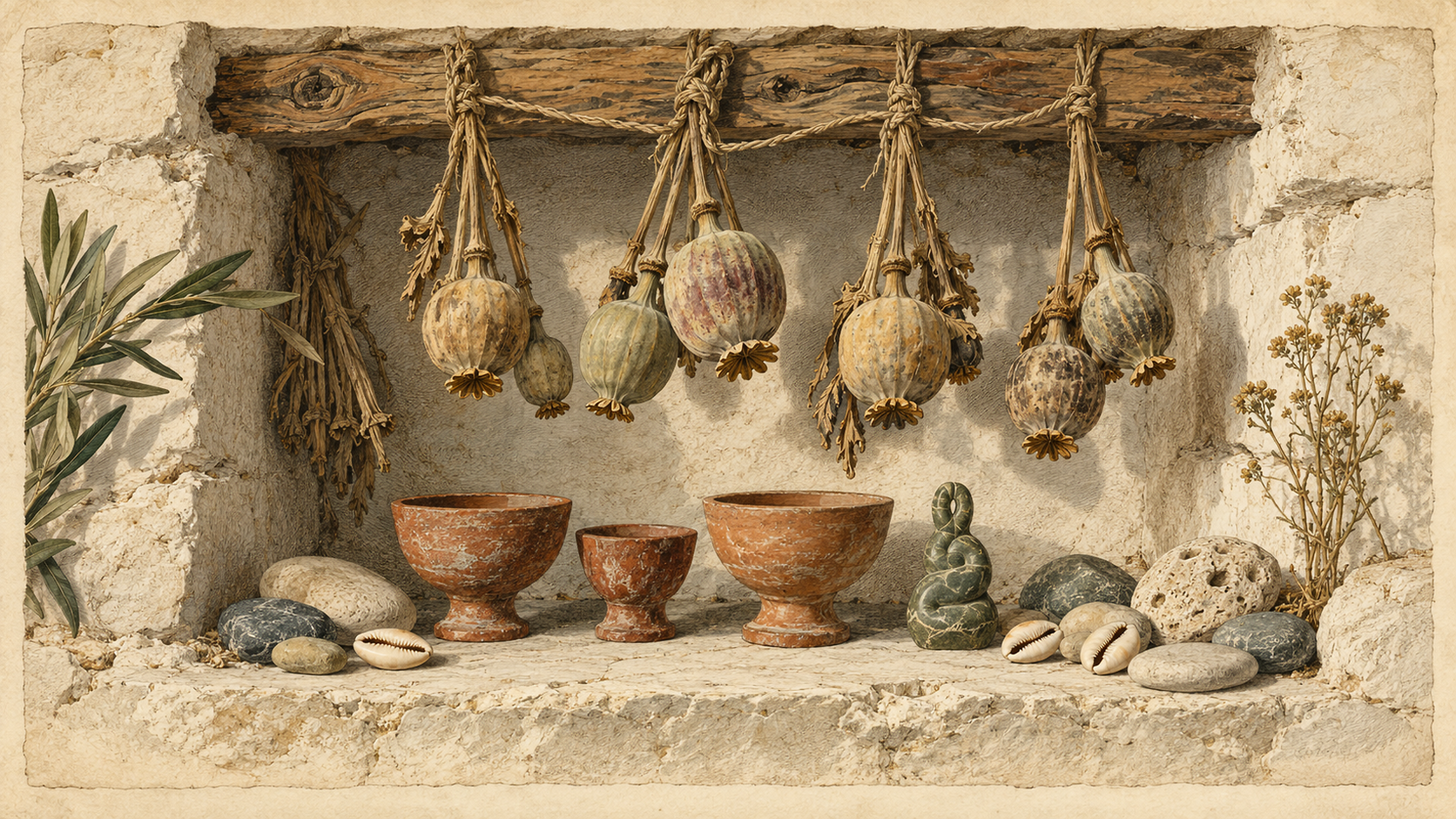
While grand palatial complexes dominate the historical narrative, many of the most compelling poppy-form artifacts emerge from modest household shrines and domestic storage rooms. In settlements like Phylakopi on Melos, stone pendants, pierced terracotta discs, and miniature vessels were discovered not in central throne rooms, but within small, bench-lined rooms adjacent to family living quarters.
These contexts suggest that the symbolic properties of the poppy were woven into everyday domestic religion. In an era without standardized synthetic analgesics, household practitioners relied upon herbal knowledge passed down through generations. Dried capsules were easily stored, strung together on raffia, and suspended from kitchen beams to keep them clear of moisture and vermin. The domestic replication of these hanging bundles in stone and clay may have served as an emblem of domestic health, warding off ailments and securing restful sleep for the household.
Furthermore, the miniature size of many Cycladic capsule pendants indicates that they were personal possessions rather than temple furniture. Worn around the neck or bound to the wrist, they accompanied individuals through routine tasks, perhaps serving as amulets during childbirth, chronic illness, or travel across perilous sea lanes. In this domestic framework, the capsule was not a distant symbol of palatial power, but an intimate companion to physical vulnerability.
Funerary Deposits and the Underworld Motif
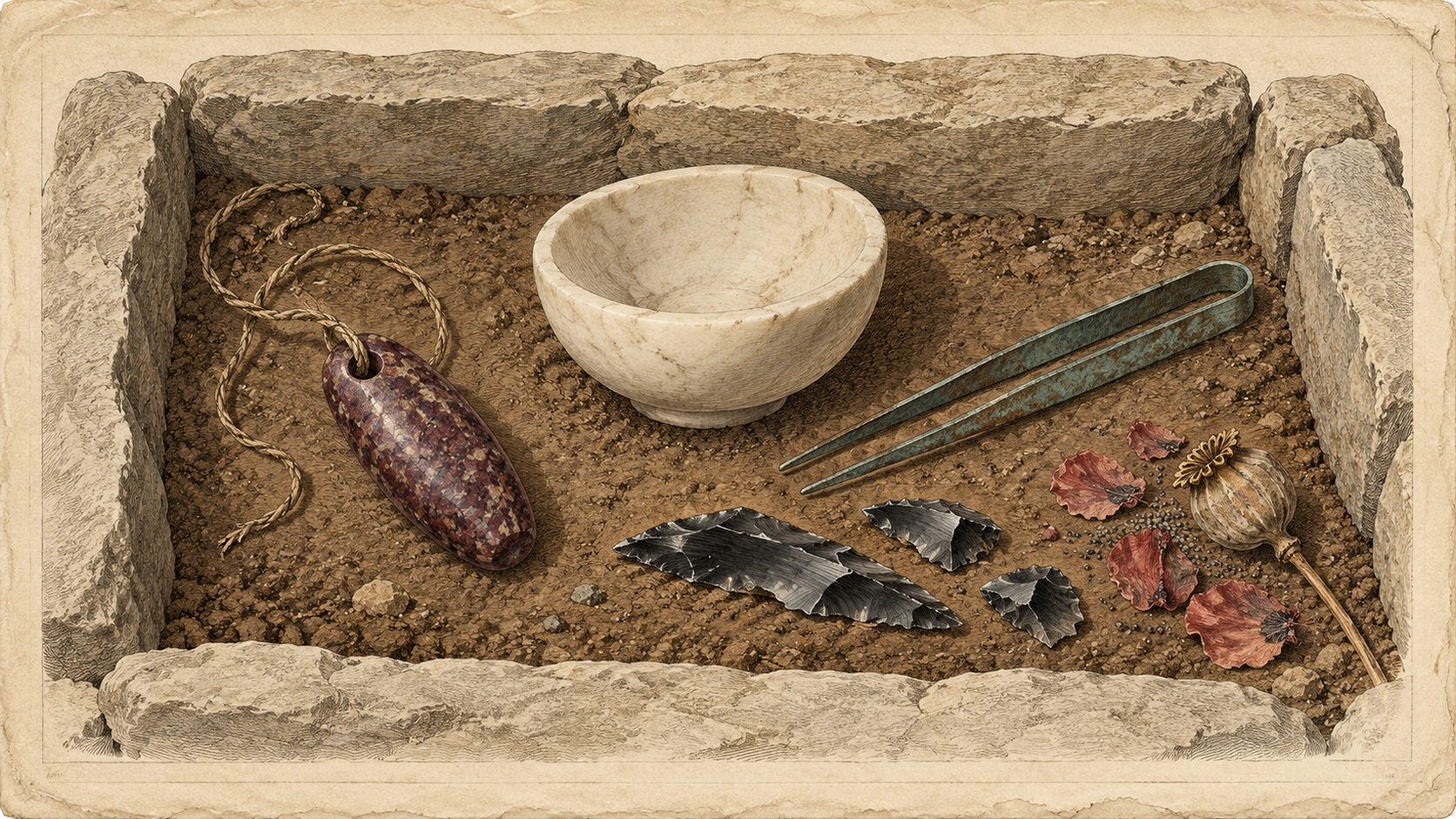
The presence of poppy-form pendants and vessels in Aegean grave assemblages establishes a clear connection between the plant and mortuary practice. In the chamber tombs and cist graves of the Cyclades and Crete, miniature stone capsules frequently accompany the deceased alongside obsidian blades, bronze tweezers, and fine drinking cups. The association of Papaver somniferum with death, mourning, and the sleep of the deceased is an enduring thematic thread in classical mythology that appears to have deep prehistoric roots.
In Greek myth, Hypnos (Sleep) and Thanatos (Death) were twin brothers, born of Nyx (Night), and both were frequently depicted crowned with or bearing poppy stems. While Homer and Hesiod wrote centuries after the collapse of the Bronze Age palaces, their mythic frameworks likely inherited elements of earlier Aegean religion. The sleep-inducing properties of the poppy offered a natural, deeply intuitive metaphor for physical death: an untroubled slumber from which the sleeper does not awake.
Placing a stone capsule pendant within a burial cist may have been an intentional act of comfort for the deceased, a gesture intended to ensure an unmolested passage into the underworld. The durability of porphyry, steatite, or gold ensured that the token would remain intact long after the perishable offerings of flowers, wine, and food had disintegrated into the tomb floor.
The Linear B Tablets and Agricultural Realities
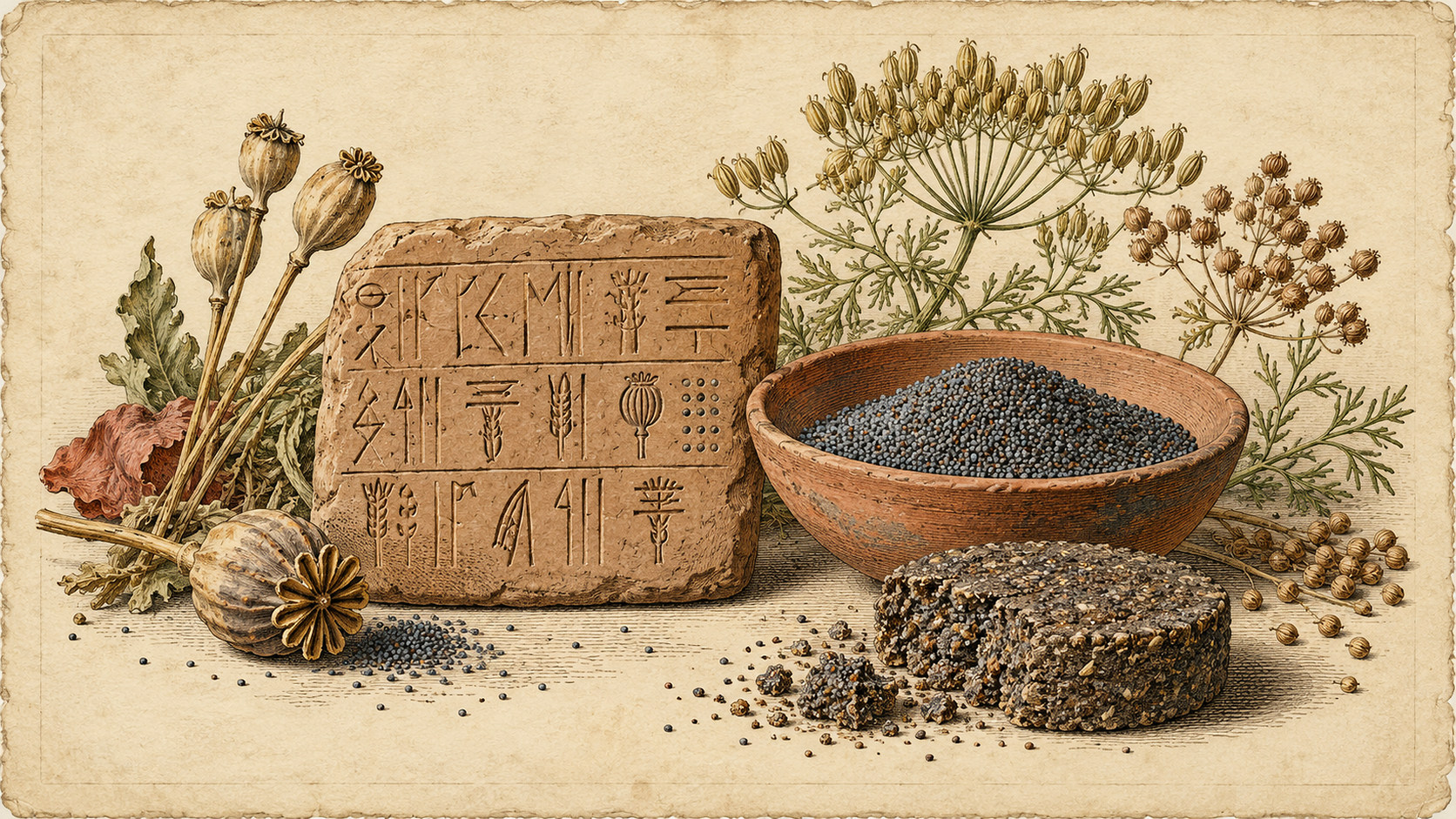
To bridge the gap between archaeological speculation and historical reality, researchers turn to the administrative records of the Late Bronze Age palatial administrations preserved on Linear B clay tablets. Found at Knossos on Crete and Pylos and Mycenae on the Greek mainland, these economic inventories document palatial oversight of crops, livestock, textiles, and religious offerings in an archaic form of Greek.
In several tablets from Knossos and Pylos, scribes record quantities of a crop transcribed phonetically as 'me-ko' or 'ma-ka', widely identified with the Greek word mekon (poppy). The tablets quantify these harvests alongside coriander, sesame, cumin, and fennel, categorizing them as condimentary crops, perfumery ingredients, or agricultural rations rather than specialized sacred drugs. The records indicate that the palaces managed substantial quantities of poppy seed, which were collected, stored, and redistributed within institutional economic circuits.
The Linear B evidence provides an essential reality check against hyper-mystified interpretations of Aegean poppy use. Poppy seeds are an exceptional source of dietary fats and protein, widely utilized in bread-making, oil pressing, and confectionery across the ancient Near East and Mediterranean. The presence of poppies in palatial ledgers demonstrates that the plant was an integral part of standard agricultural production, valued for its culinary and nutritional utility alongside any medicinal or ceremonial applications.
Re-evaluating the Somniferous Aegean
When the material culture of the Cyclades and Crete is viewed as an integrated whole, a balanced picture of Papaver somniferum emerges—one that avoids both uncritical sensationalism and dismissive reductionism. The inhabitants of the Bronze Age Aegean clearly recognized, cultivated, and visually celebrated the opium poppy, incorporating its diagnostic anatomy into their most sacred ceramic and lapidary creations.
The stylized capsule served as a versatile visual signifier across multiple social spheres. In palatial administration, it was a productive oil- and seed-bearing crop; in personal adornment, a durable amulet of porphyry or serpentine worn for apotropaic protection; in domestic religion, an emblem of relief and slumber; and in funerary ritual, a poignant marker of peaceful transition. The famous figurines of Gazi and the elegant pendants of the Cyclades reflect a culture that viewed the plant not with illicit intrigue, but with deep respect for its botanical form and restorative potency.
Future advancements in organic residue analysis, micro-botanical seed identification, and dental calculus studies will inevitably refine our understanding of how island communities utilized this versatile herb. Until then, the clay vessels and carved stone capsules preserved in Aegean museums remain silent witnesses to an ancient relationship: a physical record where human hands shaped stubborn stone and wet earth to mirror the quiet architecture of a somniferous flower.

Further reading
Follow the references into botanical research, historical herbals and the evidence behind the story.
The British Museum: Base Ring Juglet CollectionExternal reference · Opens in a new tab Metropolitan Museum of Art: Aegean Bronze Age ArtifactsExternal reference · Opens in a new tab